Experts from the Council of Europe say austerity measures continue to have a “detrimental” impact on the UK government’s ability to meet its legal obligations under the Istanbul Convention, an international treaty on violence against women and girls.
Their report finds:
“Women’s shelters across the UK are faced with a demand that greatly exceeds the available places; the provision by women’s rights organisations of specialist counselling to victims of violence is patchy, and the financing of these crucial specialist support services is insecure.”
Indeed, earlier this year, Women’s Aid reported a funding shortfall of £321 million for specialist domestic abuse services in England. Women’s Aid have calculated a total annual service cost of £516 million. So, specialist domestic abuse services are currently receiving less than half the funding they need in order to deliver a safe and adequate service to women who are trying to escape and recover from domestic abuse.
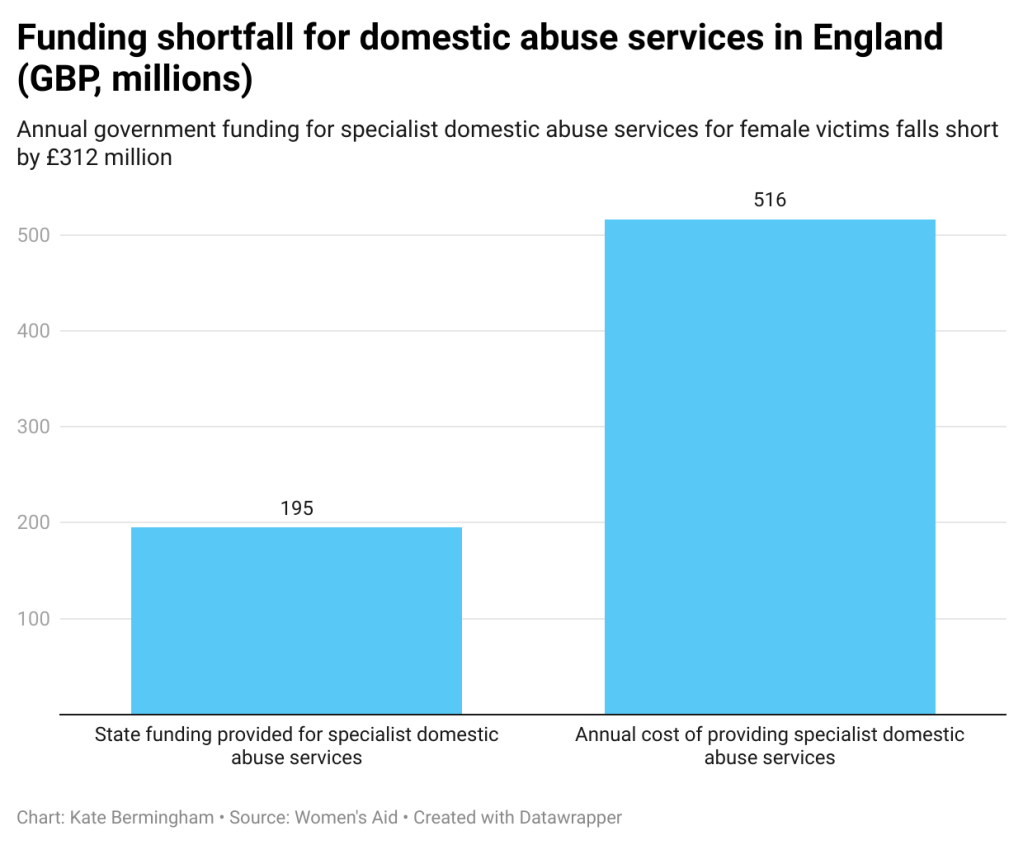
The same Women’s Aid report estimates that less than one in ten women who experiences domestic abuse receives support from a refuge or community-based service, and only 40% of refuge referrals lead to a woman being offered a refuge space. A further Women’s Aid report, entitled Nowhere to Turn, found that 24% of women waiting for a refuge space experienced further abuse from their perpetrator, and 9% of women ended up sleeping rough during this time.
GREVIO, the Council of Europe’s group of experts on action against violence against women and domestic violence, also linked poor criminal justice outcomes to years of austerity cuts in the UK.
Their report finds:
“(A) clear link between shortcomings in the training of law-enforcement officials, public prosecutors and judges, and low charging rates in cases of violence against women.
Attrition rates for rape and sexual violence, stalking and domestic violence are particularly high, and the duration of related proceedings is long, including because of insufficient human, financial and technical resources.”
Despite positive legislative developments, such as the Domestic Abuse Act (2021), GREVIO notes “alarming levels of police misconduct” and “deep-seated misogyny and sexism” are leading to persistent failures in the criminal justice response to violence against women and girls.
The report also calls for more law enforcement and legal professionals who are specialised in supporting female victims of violence; a gender-sensitive approach to implementing law and policies relating to violence against women and girls; and decisive action to reduce delays in criminal cases caused by austerity-related court backlogs.
 Living under Patriarchy